By Olivia Murphy Major
When I was young, I suffered from intense spells of loneliness. It didn’t matter if my parents or sisters were around—they tried to keep me occupied as best they could, but no one could pull me from my dislocation. These episodes lasted for hours, sometimes days. There was no telling how long they would be. I refused to leave my room. I would lie in my bed and weep, staring at my yellow-painted ceiling, warm tears sliding down my temples as my mother stroked my hair. She had a severe expression. I felt far, far away from her. She gave me pills to relax me, and I waited to be taken through that thin passage into sleep.
My sisters knelt at my bedside and told me stories or reminded me of things I had once enjoyed. With their faces close to mine, they talked about the fair we went to every summer. They described the many booths clustered at the entrance, white tents of treasures and shade. I drifted to sleep thinking of the tents with buckets of candy—saltwater taffy, oval chocolates, and caramels. Vendors sold funnel cakes and lemonade, and others sold hats and jewellery.
These memories held something indulgent and secretive. I remembered the many caged animals. There were stables laid with hay where the pigs were kept for the races, whining and grunting, another tent with horses shaking their manes and stamping their feet in manure, another full of rabbit cages (I remembered the echoey sound of their feet kicking the iron bars and making them clang), and tents with chickens ruffling their feathers. Roosters clucked in small pens, pacing back and forth, swaying their coloured, silken tails. People gathered to watch the animals, and children stuck their hands through metal bars to feed them and screeched when horses’ mouths bristled on their palms. Boys shouted, red and blue lights blinked, smells of food and smoke drifted in the air. Shining carousel ponies bared their painted teeth, their golden hooves drawn up to run.
Around this time was when I first discovered the power of dreams. In one of my recurring dreams, I was swimming above a group of whales. They were the size of houses, the colour and smoothness of stones. Sunlight danced on their wide backs. They let out low, sonorous wails that hummed through the water, vibrating beneath my skin. Even in these peaceful dreams, I felt something watching me, and as I dreamt, I ran out of breath as I listened to the slow, terrifying rhythm of my heart.
If I could not sleep, I went and pressed my ears to the walls of my room as if checking for a pulse. I heard the mice travel to and from their nests inside the walls. I pictured them huddled together, tilting their pink satin ears to listen to me. I waited in the pitch-black of the room, tracing the wallpaper with my fingers. My father played the piano in the room next to mine, stopping every now and then to let out a sharp, singular cough, like a cat’s. The songs he played were somber. The notes bled together, opening, yawning sorrowfully, swelling into the space between my room and his. I often stayed up late into the night listening with my ear against the wall until he finally pulled the wooden cover over the keys—a loud, final sound that reverberated through the floors.
My episode had lasted eight days when my mother finally took me to an expert. He told her that sleep wasn’t the answer; in fact, staying at home in my bed might make things worse. He recommended that I go out into the waking world.
That night my parents took us to dinner. It was as if everything was cast in shadow. Our table was beside a fireplace, and I sat silently, watching in terror as the flames leapt and their orange sparks caught on the creosote before fading. A band played on a stage in the corner of the dining room and filled the air with sound. It could have swallowed me. My mother mouthed words at my father. My sisters whispered to each other. It’s going to snow tonight, I heard them say. They held hands under the table. I looked outside as the dark closed in on us through the windows, and made a silent prayer for snow. Our waitress gathered empty plates, leaning over as her hips touched the wooden edges of the tables. The men in the dining room watched her. As she walked, her long legs moved as if through water. I felt feverish and strange. An old couple sat at the table beside us. The man was glassy-eyed, staring straight ahead at nothing in particular, his large hands resting on the table as he chewed. His wife got up and stood in front of the stage and began to dance. She twisted her body and shook her wrinkled arms above her head. She threw her head back and laughed. Her silver molars twinkled, a flash in the dark of her mouth, like fish scales in murky water.
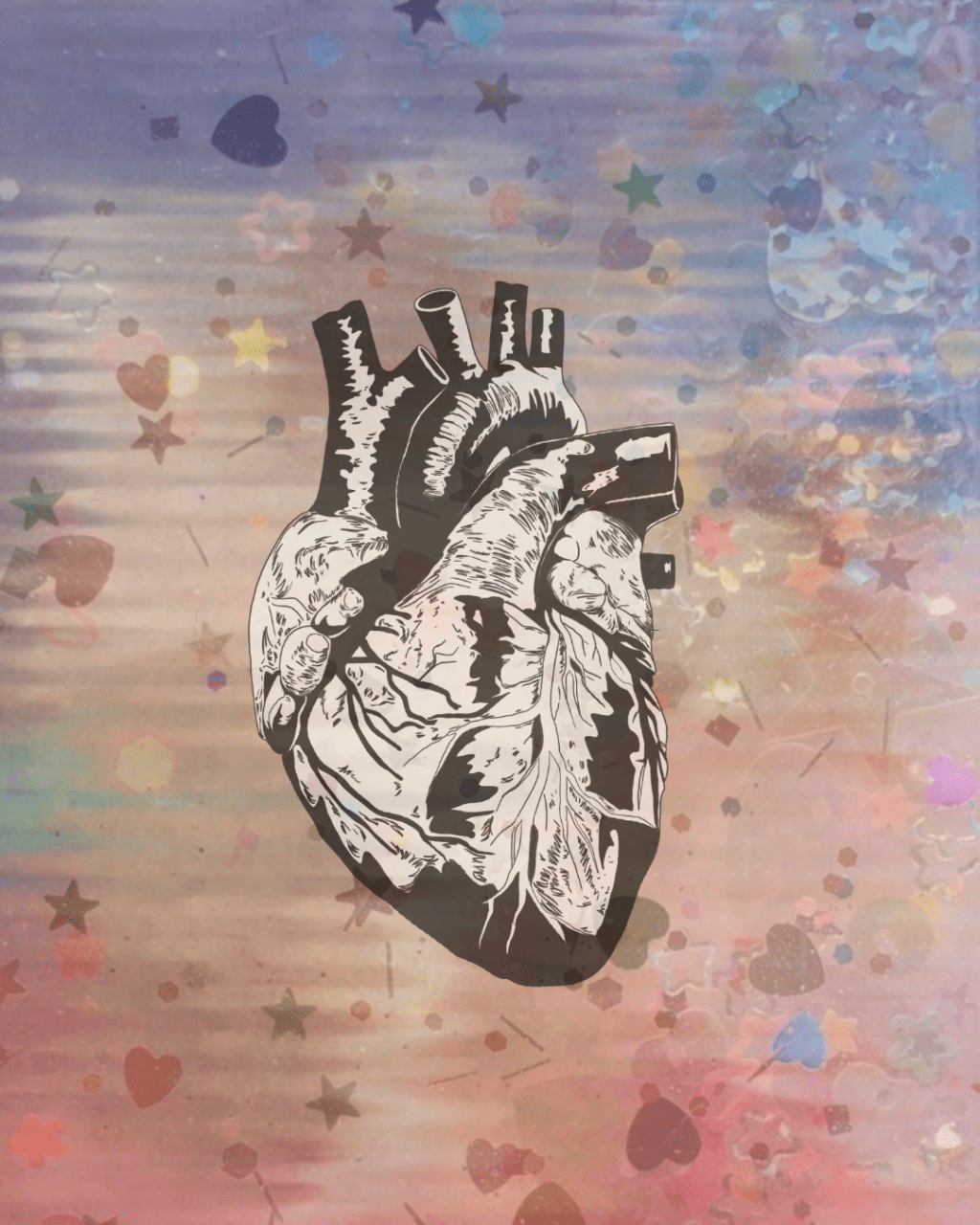
I got up that night when everyone was asleep and stood in front of my window. The yard was cloaked with snow, and the moonlight reflected off of it, casting a bluish glow which gathered in the air. Moisture clung to the glass in droplets that shone like sequins. I looked out at the lawn, the spindly forest, and waited for movement. Some animal could paw its way through the brush, I imagined, or distant headlights could come sweeping over the black mailbox, or a wind could shake the trees. Nothing moved. The world has stopped, I thought. I laid back down and closed my eyes. I listened to the quiet thumping of my heart, and thought of the strange, vital organ inside me—I pictured it as an animal, coiled and warm behind the bones of my rib cage. I pictured slick, dark blood moving like oil from one cavern to the next, through unlit, winding corridors. I thought of the animal having its own heart, and in a half-sleep that brought me closer to dreams, I thought of the infinite number of animal hearts within me, one inside the other, all beating frantically. In that way, I was not alone, but I was afraid; the thing inside me felt entirely separate and monstrous.
 Soliloquies Anthology 30.1
Leave a comment