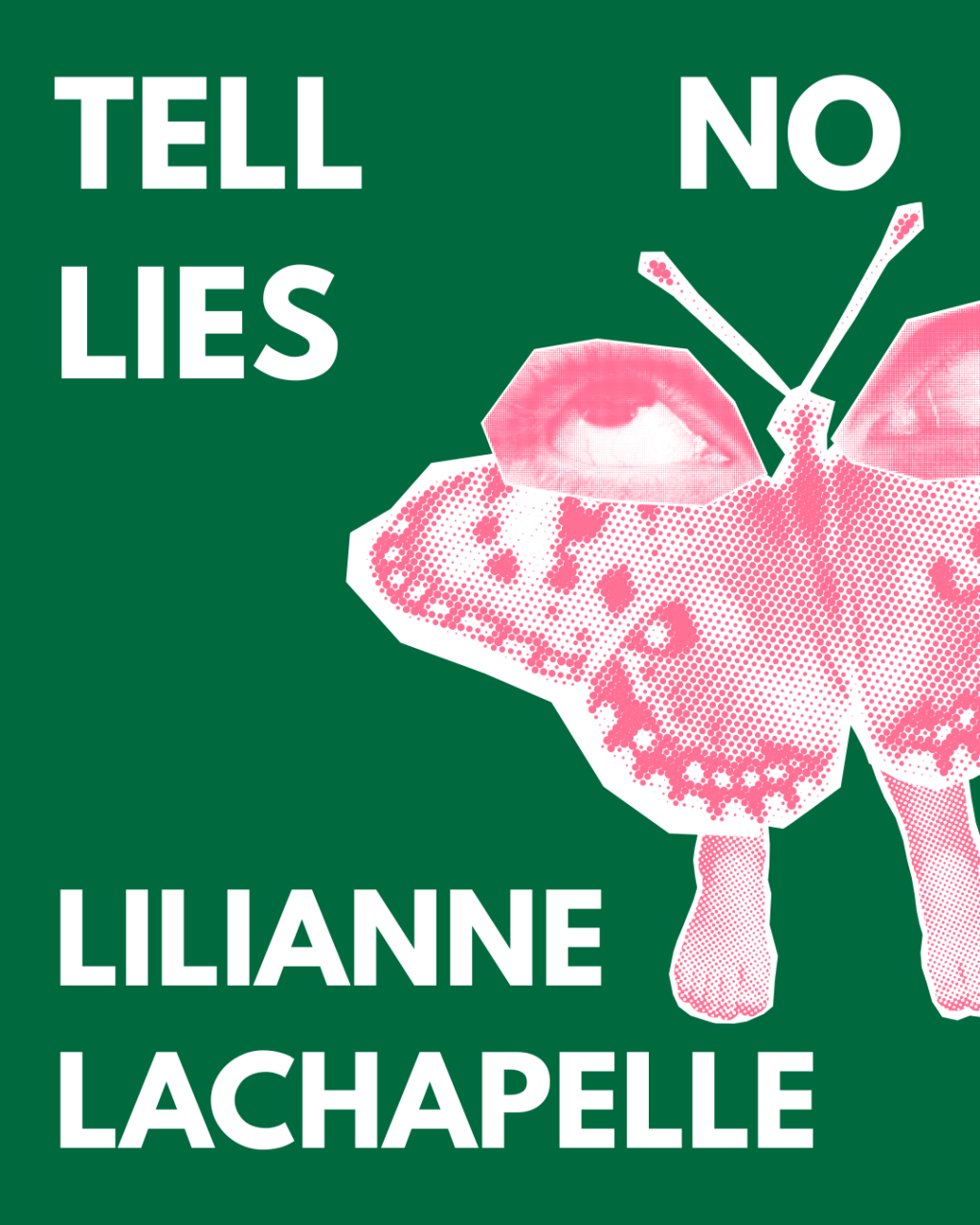
I am always reluctant to write non-fiction because I’m unsure how to write an honest work. Whenever I sit down to seriously write about my real life, I become overwhelmed by a sense of relativity that I cannot escape from. I was raised on the idiom “there are two sides to the same coin” and feared the dishonesty of my perspective alone. How can I offer the truth when I don’t have complete access to it?
I stare at my computer screen anxiously until I delete every sentence, revise every word. I have reworked this opening paragraph more times than I can count, and yet no version feels genuine. For me, the act of writing transforms anything into a fabrication in and of itself. I cannot promise anything true. But I can give you my own experiences with the tension between fiction and non-fiction.
The main characteristic that I was attributed to in childhood was a strong imagination.
My mother always liked to introduce my brother and me by describing our different responses when we were caught in a tall tale. Her son, the rational and astute child, would answer that it had happened in a dream. Her daughter, the fanciful and strange one, would say that it had happened when she was a baby. My mother believes (an act of speculative fiction, as she has no confirmation from my younger self that this assumption is true) that my imagination was so vivid that I could clearly picture the false events I was describing, leaving no room for my small mind to understand the difference between these visions and my memories.
I described those sorts of disconnects to my boss once, and he told me it reminded him of Oliver Sacks’ article “Speak, Memory,” where he argues that stories associated with vivid sensory details and strong emotions become indistinguishable from memories. My case felt different, however. Nothing was distinguishable.
I don’t remember exactly when my imagination labelled me as a liar, but it came gradually as my friends stopped believing in the things that were still real to me. I could recollect the fairies we had seen on the bumblebees and communicate with the woodland spirits that lived in the evergreen bushes, and I defended the validity of these impressions with unwavering faith. My peers began to see my certainty either as a lie or as a delusion. My point of view was not to be trusted.
My mother eventually had to debunk a lot of my beliefs after I had attacked another girl in the playground for preaching that Santa wasn’t real. My 2nd grade teacher told her that I needed to build a stronger grip on truth, that my imagination was starting to impact my relationships in the real world.
The knowledge was crushing. Not only because it showed a version of reality that seemed quite uneventful to me, but mostly because it didn’t stop the imaginative creations that continued to enrapture me. Even as I became aware of my fallibility, my mind still experienced somewhat paranormal things. I saw, heard, felt, but had to stop relying on these empirical senses.
Non-fiction demands that nothing comes from the imaginary, but I had built most of my existence from it. My personality derived from adventures I had invented and my desires from concepts I had created. I had always lived in between, and now found myself severed. I was untrustworthy. I was not a real person.
It would be a lie to pretend I only ever tried to tell the truth. My attitude towards honesty changed when I decided to go study at an English cegep, the linguistic switch creating gaps in my life and altering my methods of communication completely. In tune with Herder’s theory on linguistic relativism, the English language was a portal into a new reality.
Fiction had always been in English at home. As a child, I was only allowed to watch movies if they were linguistically educational. As a teenager, I preferred reading in the original language when I could and got most of my recommendations from popular Anglophone YouTubers. My connection to the artistic and fictional worlds, a version of the imaginary that was socially acceptable, became intrinsically linked to English.
In the beginning of my English studies, it felt like I was living a completely fictionalized life. The lines between fiction and reality began to blur as stories and daydreams I had written became true in strange and unexpected ways. I started keeping a diary, writing in English to accentuate the fantastic possibilities of this new existence. I felt immersed in my imagination; the world was as I liked it.
The rules for authenticity and honesty became muddled by the feeling of unreality I was experiencing. I could tell the truth if I wanted to, the English words making my stories sound like tales instead of personal events. I could lie if it felt more accurate or interesting; the English world was not a real one. The concept of truth was altered by the translation.
Have I not already lied to you in the first part of this essay by letting you believe that my childhood had been in English? Would that count as a lack of transparency, an important omission? Those memories have been so transformed by the language and the medium that they seem to me fictionalized accounts.
I think this new impulse to lie didn’t so much come from a desire but from a need to create narrative coherence. The most pivotal lyric in Tracy Chapman’s song “Telling Stories” is the line “in the fiction of the space between / sometimes a lie is the best thing,” which talks about how the small assumptions and extrapolations we make improve our stories. Storytelling mattered more than truth in English; I would never dare tell such white lies in French.
When the linguistic whiplash started to disappear, and my realities began to coexist, I felt as disillusioned as when I realized magic wasn’t real. My personal diary from that time began to feel like one long tale I was telling myself.
My obsession with truth only censored me in English when my writing became academic or journalistic.
If I had feared my own perspective before I began my collegial education, my introduction to scholarly research revealed new depths to my paranoia. My professors became manifestations of my worst fears when it came to writing non-fiction, insisting that all my assertions needed to be supported by reputable sources written by reputable people and accusing my good work of not being my own. It became quickly evident to me once more that I was not to be trusted, especially not as a student.
In my first year of cegep, I was accused of plagiarism after I had not properly referenced a work. The professor explained, while I was spasming and crying in academic shame, that I had to credit every work that influenced my writing, even those I never quoted or used in my final research paper.
While this small mistake didn’t tarnish my student record, it left a noticeable mark in all my essays moving forward. My writing became “a quote from the primary source,” therefore “a quote from the secondary source.” The words that were my own were only connective, leaving no room for me to question whether they could be subconsciously someone else’s. I moved the telephone wires and stayed silent throughout my entire thesis. My name was on the essay, but I was Lilianne Lachapelle, the literary collector, never the scholar. But I got the best marks. I was a model pupil.
During that same time, I also began writing articles for my school paper, which introduced me to the journalistic standard and the “objective” approach. Working for the Arts and Culture section, I described many fairs, events and workshops in the most colourless language possible, any adjectives or adverbs betraying a subjectivity that demonstrated an interest on my part. I remember having to delete the qualifier “valiant” from an article once, my opinion being too displayed by that word. Every tap on my delete key felt like a small lie (are metaphors too fictional for “objective” writing too?).
Those years were the time I felt the most erased in my own writing, my favoured method of communication. I was either hiding behind citations and proverbs and speaking from different mouths, or I was not saying anything at all. Bleak, that was real life; that was non-fiction.
It was through one of my favourite books, The Passion by Jeanette Winterson, that I began to find comfort with my own narrative and began to write non-fiction.
There is a refrain that plays an important role in how we can interpret the novel’s surrealist elements: “I’m just telling stories. Trust me.” This line, usually added at the end of a strange recollection or a magical impression, serves as an appeal to the characters’ flawed interpretations as necessary for their personal narratives. The discrepancies in their reality are intrinsically part of it; their omission is therefore dishonest.
Magical realism: that was the literary genre that defined my life.
This realization gave me a new ease to write about my own experiences. If I wanted to give an honest account, I had to share those strange perceptions that clouded the truth. It was the way I lived it, the shape I saw the world in. It was my reality.
In “Speak, Memory,” Sacks ends the essay with the argument that our only truth is narrative truth. A subjective work might miss important details and rational truths, but it will always be the most honest.
For this piece, the only thing you can sincerely call me is the narrator. So trust me if you like. All lies are honest; all fiction is true.


Leave a Reply